
Tyree Barnett
feature, culture
July 20, 2026
As a Black American, there exists a space between me and my ancestors. In that gap are the missing lineages and languages, family trees and histories, culture and customs.
My people could indeed be mistaken for a population adrift, without an anchor or destination.
While I live on Darug land in Sydney, my family back in the USA still hug the shores of the Carolinas, the only place their ancestors knew in the so-called New World.
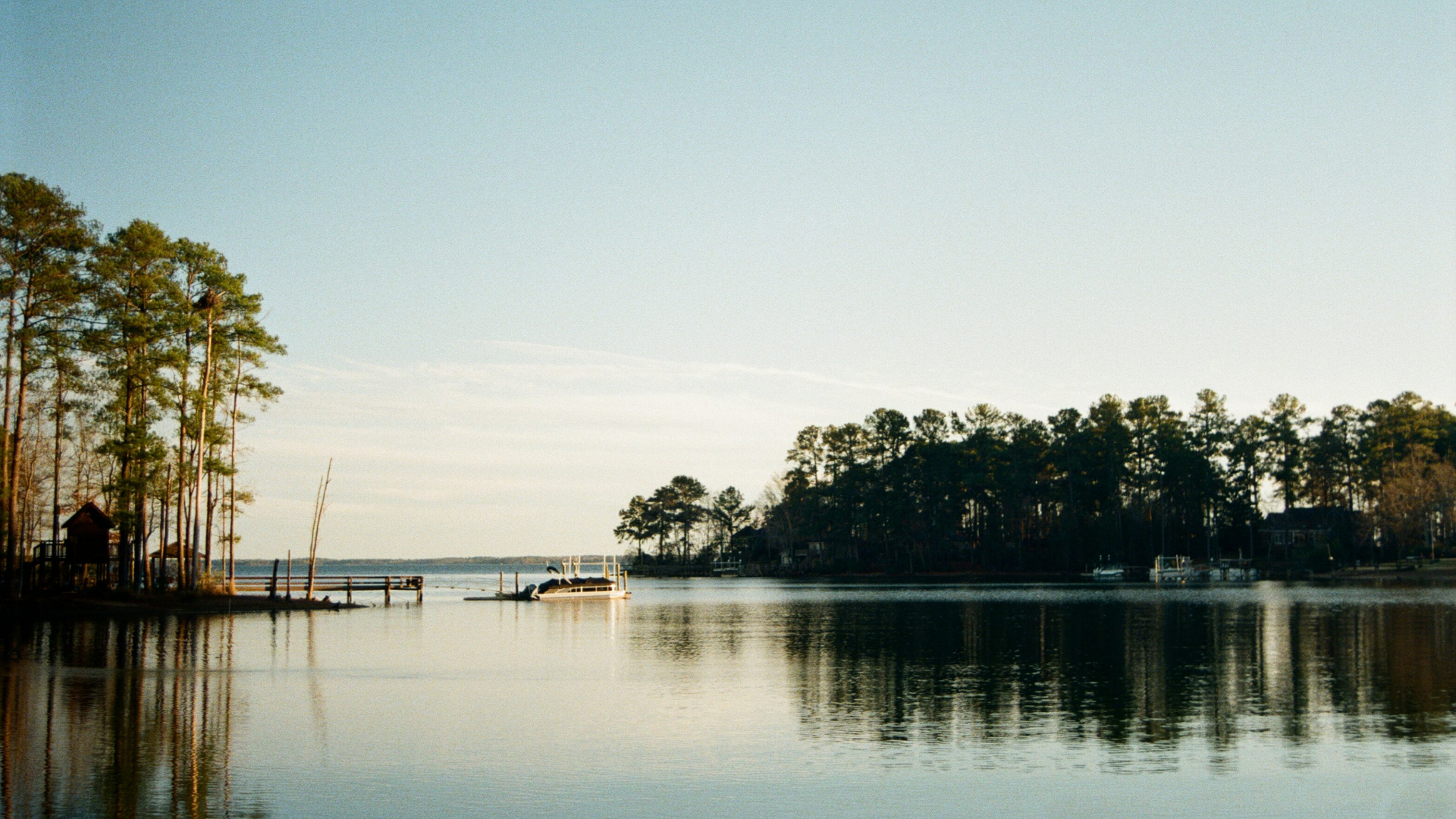
Before we started a family here, my partner Nia and I traced our own ancestry. We wanted to have an origin story for our children: not that their existence began on a plantation under the lash of a whip and a burning sun. We ascended from much more.
It’s what I re-tell in my book Stolen Man on Stolen Land: Being African American in Australia. It covers the first seven years of our journey here including the joys, racism, experiences with First Peoples, finding community and belonging, and starting a family.
In a chapter called Blackmosphere, my character has a reflection during a visit to a photography exhibit. It’s a retelling of a real exhibit displayed years ago in Redfern. Acclaimed American photographer Nathaniel Palmer curated the exhibit called Known Rivers at 107 Projects on Redfern Street. It featured subjects from First Nations Aus, Carribean, Torres Strait Islander, African, Pacific Islander, and African American backgrounds.
In the chapter, cultural practices from Bla(c)k people, including First Nations people are featured from several auditory exhibits on the walls surrounding me. Subjects of those exhibits are also present as guests floating around the gallery. In listening to their stories of tradition, culture and belonging to land, I thought about the pieces of my own heritage that I knew post-slavery.
The Gullah Geechee community where my maternal grandmother hailed from maintains one of the strongest, most enduring connections to West Africa in the country. After decades of dormancy, my parents took steps to rekindle that connection. Last year, they attended the annual Gullah festival in Beaufort, South Carolina. The self-proclaimed original Gullah festival is held yearly in late spring on Memorial Day weekend. In the American South, that means warm and sunny weather without the wash of humidity that arrives with summer.

It was a crucial reunion for our family as my maternal grandmother did not pass down the Gullah traditions she still knew to my mother, including the Gullah creole language.
Retelling their weekend trip to me, Dad complained over a WhatsApp video about the price of goods there, including the popular woven baskets of the Gullah Geechee. As they strolled across the emerald bermuda grass at the park hosting the festival, Mom marvelled behind her sunglasses at the art of basket-making. Wrinkled veiny hands taught younger, manicured ones how to weave together the long, thin reeds of sweetgrass. Women sat together around a table covered with vibrant African print. Tattooed shoulders of the younger women brushed against the older wrinkled ones of their instructors.
My parents made laps around the different stalls and after some convincing, Dad bought him and Mom matching dashikis.

They also tasted cuisine from food vendors at the festival. That same food formed the building blocks of Southern cuisine and the famed soul food from Black America. Dad slurped down okra soup created with the edible green seed pods of the plant and other leafy vegetables. A smiling woman who sold him the soup, while wiping away pearls of sweat from her neck and forehead, was a Gullah native who lived in Beaufort. Her soup left a slimy mouthfeel courtesy of the slippery okra that I was never a fan of. In Nigeria, where part of our ancestral heritage comes from, okra soup is a delicacy that can also contain meat and seafood.
Throughout that sun-splashed day, live music electrified the air: the powerful Southern gospel that my mother loved along with drumming circles, dance ensembles, jazz, funk, and even Gullah storytellers shared histories to the audience.
.png)
The Gullah Festival began in 1985 by a family of five Black women who wanted to preserve their community’s celebration of Decoration Day (now Memorial Day). Decades in, the Gullah Festival seeks to preserve sacred practices, ensuring that new hands can still weave baskets and make okra soup.
That same spirit of preservation bore yearly festivals here in Australia celebrating First Nations culture and practices. Both African Americans and First Nations communities also showed incredible ingenuity in such areas as farming and fishing. Those practices are still studied today.
On islands off the North Carolina coast, Gullah Geechee farmers dug a network of flood gates, bulkheads, and complex canal systems to farm rice. These systems were crucial as rice was not a native crop to the Southern USA.
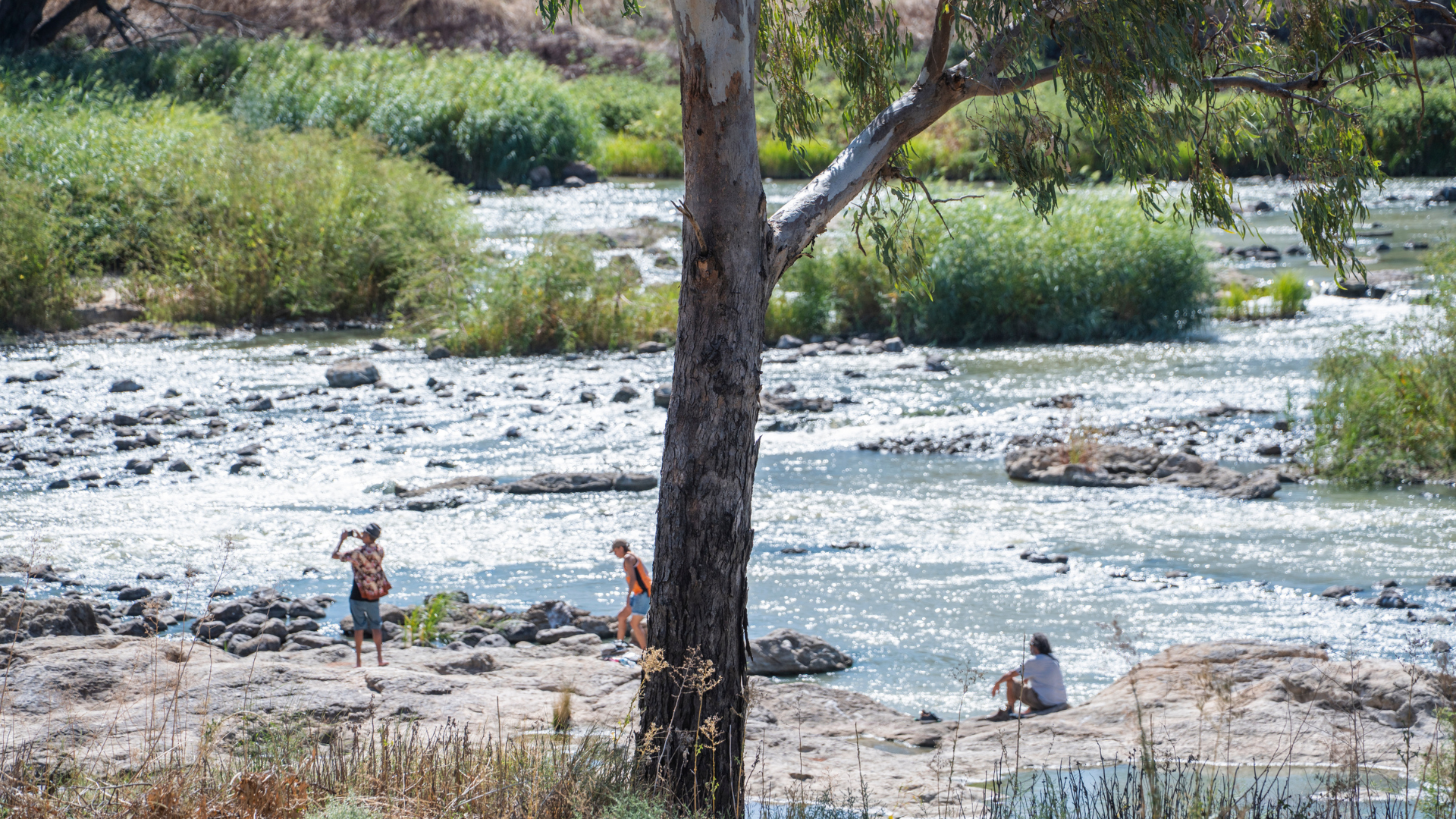
Centuries before them, First Nations Australians used intricate fish traps along the Barwon River in Brewarrina, New South Wales. Estimated to be more than 40,000 years old, the fish traps are a series of rocks, tightly packed together, extending across shallow water. Built against the river current, they captured large amounts of murray cod, callop, silver perch, and freshwater catfish during their spring migration. According to Aboriginal traditional stories, the ancestral creation Baiame and his two sons first built the fish traps. They followed a design for the trap created by Baiame’s fishing net that he tossed across the river. From there, First Nations communities that used the traps only needed to walk into the water and catch the fish under their gills. There was no need for spears or nets.
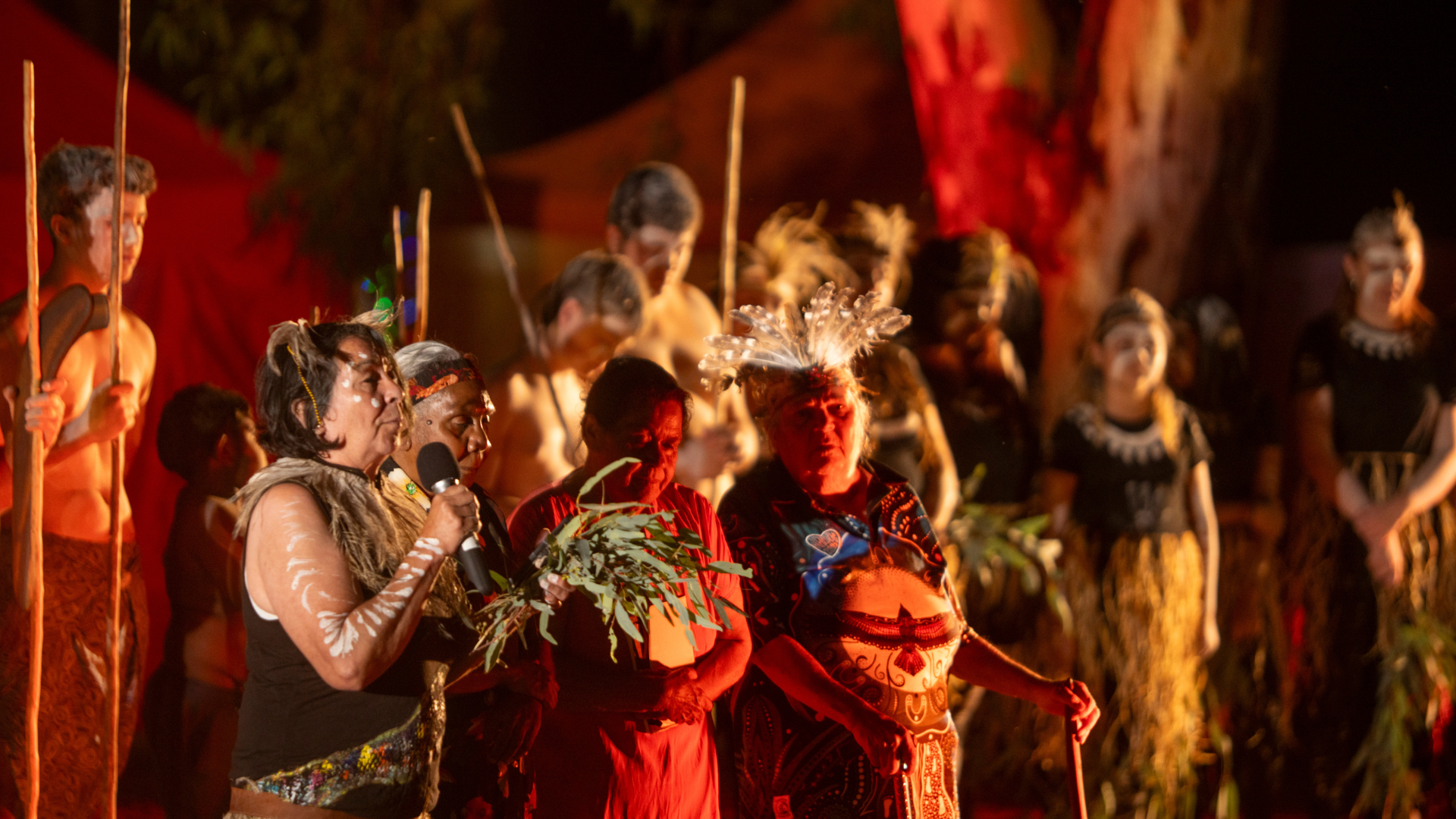
Lily Shearer, a Murrwarri Ngemba woman, and artistic director and a co-founder of Moogahlin Performing Arts, helped to start the yearly Baiame Ngunnhu Festival in honour of the fish traps and the communities they sustained. But first, she spoke to people in the community to confirm a festival was what they wanted to keep traditions and history there alive.
Like many First Nations practices, the fish traps provided more than nourishment to the eight Nations that used them. They were a site of commerce, aquaculture, socialising, and peacekeeping for hundreds of years. The traps were also a gathering place for ceremonies, exchange, and trade. Each nation maintained their own traps. Marriages were also arranged there between the Nations keeping the bloodlines clear. And trade occurred between Nations from the huge ochre deposits found on the river banks.
From a Zoom call in her Brewarinna home, Lily tells me how those traditions and sustainable practices are under threat. Dwindling native fish populations, the introduction of invasive species, overgrowth of non-native reeds and marine plants, and the expansion of American-run cotton farms that use massive amounts of water are all contributors. King Cotton, the cash crop of the American South that my ancestors likely picked as slaves, returned to be farmed on the world’s driest continent.
“They’d use all the black fellas as stick pickers. They’d say, ‘Oh you know, this is gonna be employment for our First Peoples,” Lily shared on the call behind rainbow-coloured eyeglasses. “But that’s been replaced with machinery not long after they started.”
She also said that pesticides used to spray the crops on especially windy days ended up in the river, sparking the growth of harmful algae. The turtles, mussels, black brim and the catfish that Lily ate in plenty as a child are now harder to come by for her grandchildren who are also growing up in Brewarinna.
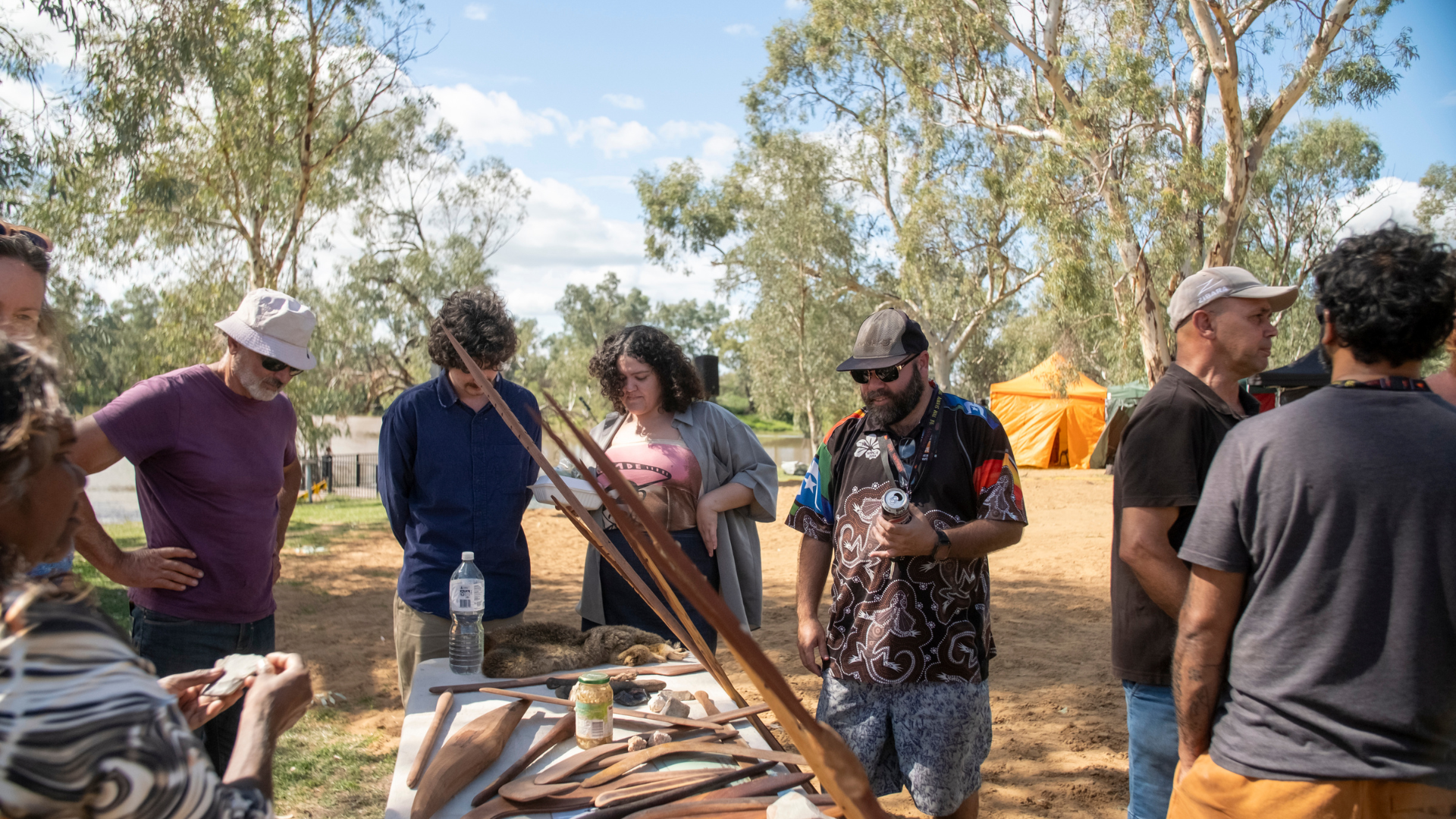
As the fish traps were a focal point of social connection, so is the yearly Baiame Ngunnhu festival. Like the Gullah Geechee Festival does in South Carolina, Baiame Ngunnhu seeks to educate others about traditional practices with stalls featuring artwork, woodcarving, weaving, language stalls teaching eight different languages of the First Peoples in that area, and traditional dance demonstrations.
Lily walked me through Baiame Ngunnhu, held in mid-April, sharing its sights and sounds.
“You’ll hear Blackfella music like Emily Wurramara, Warren Mason. Sometimes we play country music as well because blackfellas out here love Charlie Pride. And you know, our kids are into Baker Boy, Dobby. Dobby’s people are from out here. He’s a relation of mine.”
Before the festival, as organisers create sand circles for ceremonies, a congress of squawking white cockatoos fuss in the trees. Walking along the river, pelicans, eagles, herons, galah, friarbirds, and a variety of other birds fly overhead. Absent the flocks of birds, Lily describes it as a quiet, gentle scene with just the slaps of the river’s rushing waters through the ancient traps. Listening to her relative, Dobby’s album Warrangu-River Story, the hip hop artist walks me along the waters, bush crunching under his footsteps.
Similar to other First Peoples practices, Lily confirmed that Baiame Ngunnhu serves multiple purposes.
“It really lifts our wellbeing. Physically, emotionally, intellectually, and spiritually. And it’s collective so no one’s on their own. If we see someone on the outside, we’ll go ‘ah yeah, that person’s a visitor’. We’ll go and welcome them. Say hello! Where are you from?”
Baiame Ngunnhu also passes on language resources to the community: those same languages that First Peoples were forced to forget when being brought to missions. That children could not utter in school.
Language, and the traditions they speak of, can be lost within a generation: buried with an elder just like my maternal grandmother. She didn’t see value in teaching her kids about her Gullah Geechee culture, so the language and customs nearly died on her lips.
The Guardian published a series of articles last year about how the outside world is encroaching upon the once isolated Gullah Geechee culture. Commercial development is underway on a few of the islands where Gullah Geechee communities have lived for generations. New larger developments are raising property taxes in a familiar tactic that can force long-time residents to sell their land if they can’t afford to pay. Descendants of those enslaved West Africans are fighting back in court to slow down efforts to rezone their communities.
As the world pushes in and pushes on against tradition, it’s clear that preservation is an active exercise. It also needs to be executed in all forms at once. It’s the patience in elders and experienced artists teaching basket-weaving, painting, woodcarving and traditional dance to their students. It’s Lily’s work, from canvassing the community in Brewarrina before writing a grant proposal for the festival, and watching it grow. The curiosity of my parents to drive nearly 5 hours to Beaufort for the Gullah festival - and reconnection. And it culminates with my mother sharing that history with me to reflect on and write about. My people are not a population adrift, without origin nor a destination.
Tyree Barnette is the writer of Stolen Man on Stolen Land: Being an African-American in Australia. He resides as a grateful guest on the unceded lands of the Darug nation in Sydney. His writing centres on his experience as an African American in Australia. He’s writing a series of pieces for STAUNCH Magazine on connections between the First Peoples of Australia and African American’s experiences across preserving tradition, resistance and civil disobedience, and culture.
Written by Tyree Barnett
Edited by Kaylene Langford
Share

Recent posts
Navigation
Follow


Legal
Privacy Policy

.png)
.png)
.png)