
Travis De Vries
April 16, 2026
This is the first obituary that STAUNCH. has ever published.
That may seem like a strange thing to note, but it matters. It is fitting that hers is the first.
I don’t know if we will publish something like this again. But Rhoda Roberts is someone who deserves honouring in this way.
As I write this, I am grieving. There’s no cleaner way to say it. And that should be noted.
We did not prepare an obituary package for Rhoda Roberts—though maybe we should have. In newsrooms, these are prepared in advance: a body of work that collates a life, updated over time, ready for the moment someone passes. A way to ensure their legacy is captured properly.
I’m sure Rhoda contributed to many of these in her time.
She contributed to so many things.
But I am not going to list them here.
Her accolades, her roles, her achievements—they are already being spoken about. On broadcasts, in print, across the country. They are important, but they are not what this piece is for.
Because those words will never really capture who Rhoda was.
To her closest loved ones, she was “Our Rhoda”.
To everyone else, she was also “Our Rhoda”.
That was her power—her innate strength. Anyone she spent time with, she gave everything to. She made you feel like you were the most important person in the room. And so everyone who met her feels like they had a special relationship with her.
And they did.
I was lucky to have her light shine on me for a long time. Not because I saw a different side of her—but because she gave that same fullness to everyone. Everyone was special to her. And she was special to everyone.
The first time I met Rhoda, she made sure I was fed.
I was a scrawny, light-skinned Blak kid coming to her festival for the first time. We were there to dance in the opening ceremony. I probably just looked like a kid who needed something to eat.
But to Rhoda, I was something else. I was a seed to be nurtured. I was someone to be cared for.
Because of Rhoda, I went on to train in dance at NAISDA.
Because of Rhoda, I went on to dance with Bangarra.
And after Bangarra, she changed my life again.
She helped me get a job at the Sydney Opera House that I had no business getting.
I applied for a Programming Coordinator role—a baby producer—after spending a few days with her on a film festival program she had just begun as Head of Indigenous Programming. She told me to apply.
I didn’t have the skills. I didn’t have the resume. By all accounts, I interviewed terribly.
After the interview, Rhoda called me.
She asked me, straight: could I do this? Was I good with computers and things like that?
I said yes.
I spent the next six years proving that yes.
She believed me. She believed in me. And she fought for me to get that role.
I got to work alongside her. I got to be mentored by her.
I still remember my first day, sitting on the train, searching what the job even meant. What does a producer actually do? The internet didn’t know, and neither did I.
But Rhoda did.
For six years, I learnt from her. We spoke almost every day—on the phone or in person. She moved between Sydney and her home on Bundjalung Country, with her family.
I spent evenings with her. Drinking, talking, sharing stories. Scheming. Learning.
She trained me. She introduced me to people—so many incredible people. I still don’t understand how one person could be so deeply connected to so many others. And not just connected—she knew them. She cared for them.
We spoke openly. Sometimes we fought. She listened when I disagreed. She let me make mistakes. She championed my good ideas as if they were her own.
She went into bat for me.
Like she did for so many.
Rhoda brought people close. I would like to think I became part of her circle—her friends, her family.
She was family to me.
She looked after me like I was family. She looked after everyone that way. Sometimes to a fault. Sometimes at her own expense.
I have been grieving for a long time.
Since we first heard her diagnosis.
Grief does strange things. It makes you circle back, ask questions you can’t answer. You think about time differently.
What if she had gone to the doctor earlier?
What if she had spent more time caring for herself, instead of everyone else?
Maybe we would have had her for longer.
In the last few years, we weren’t as close as we had been. Life moved. Work shifted. But we would run into each other—often at the airport.
Chance meetings.
Her going one way. Me the other.
We’d get a coffee. Or step outside for a cigarette. Over the years I watched her smoke a lot of cigarettes.
We’d sit. We’d talk. She’d check in on me. I’d check in on her.
Once, I organised to have breakfast with her and introduce her to my fiancée. I wanted her approval.
Years passed like that.
The last time I saw her, she was in a hospital bed.
And she asked me how my family was.
Even then—especially then—she was thinking about others.
She cared. She always cared.
I am grieving.
As I write this, I am holding it together. Later, I won’t.
I think about her family on Bundjalung Country. I think about the scale of that grief. The wailing. The weight of it.
She was the best of us.
And her legacy is not just what she did—it is what she set in motion.
The doors she opened.
The chairs she pulled up to the table.
The space she made for us to step into.
We owe it to her to take up that space.
To continue the work.
To carry it forward.
Rhoda Roberts AO passed into the Dreaming on 21 March, 2026.
She is survived by her husband, her three children, and the countless people who loved her.
This is the first obituary STAUNCH. has published.
It is fitting that it is for her.
Because without her, none of this would be possible.
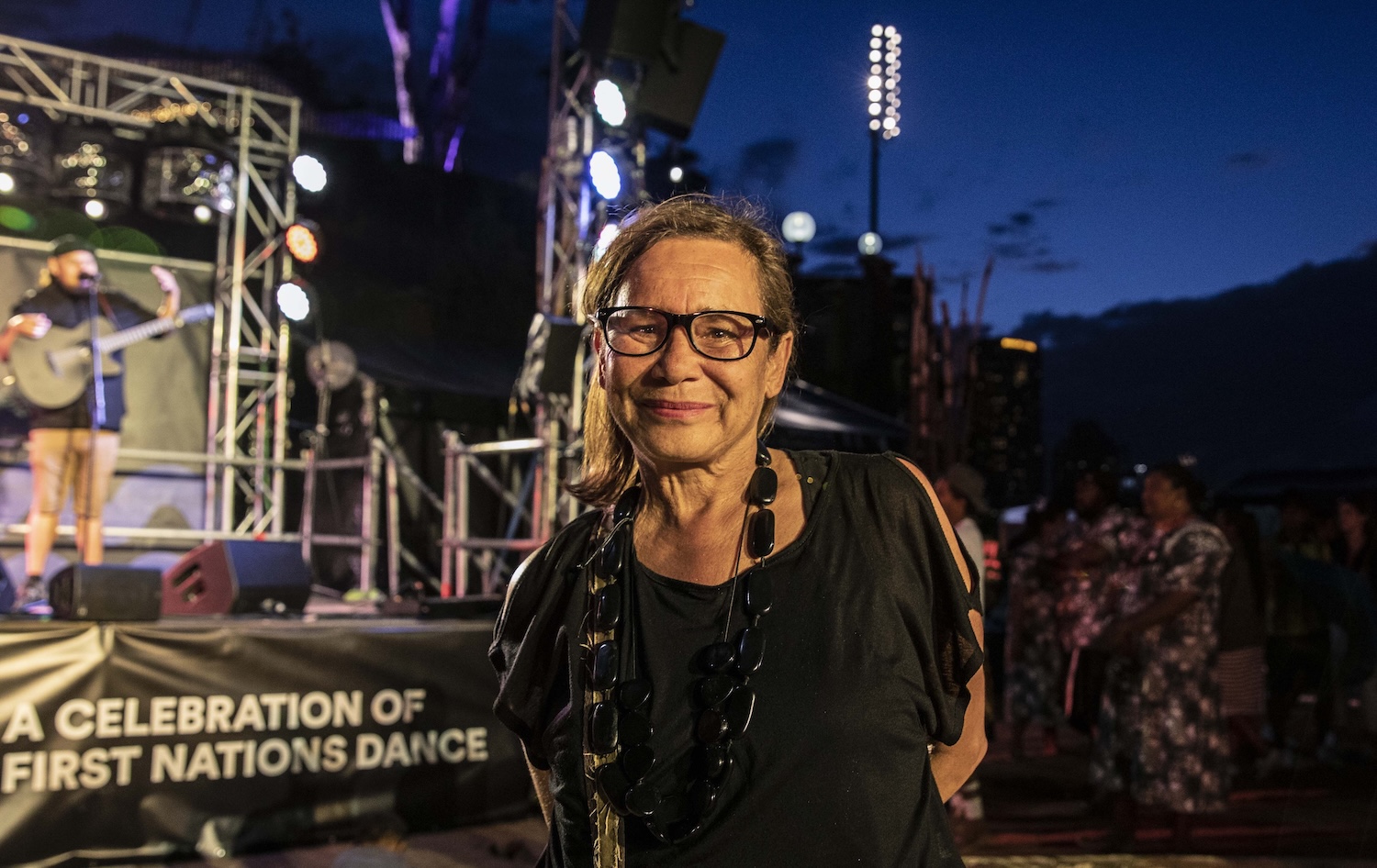
Photos: Dan Boud and Teresa Tan
Share

Recent posts
Navigation
Follow


Legal
Privacy Policy

.png)
.png)
.png)