
Travis De Vries
Opinion, Politics
March 6, 2026
Last night in Sydney, the mask slipped again.
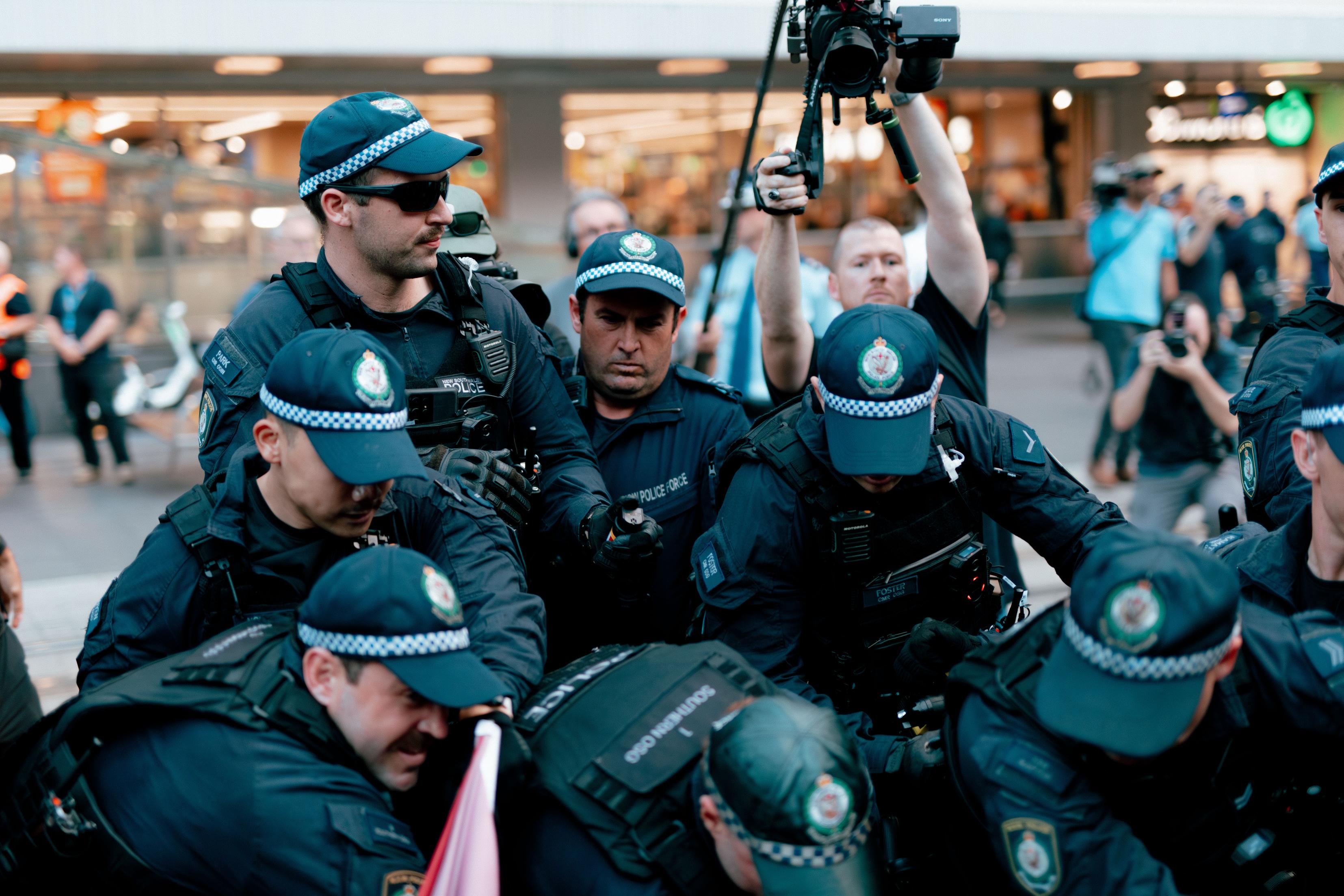
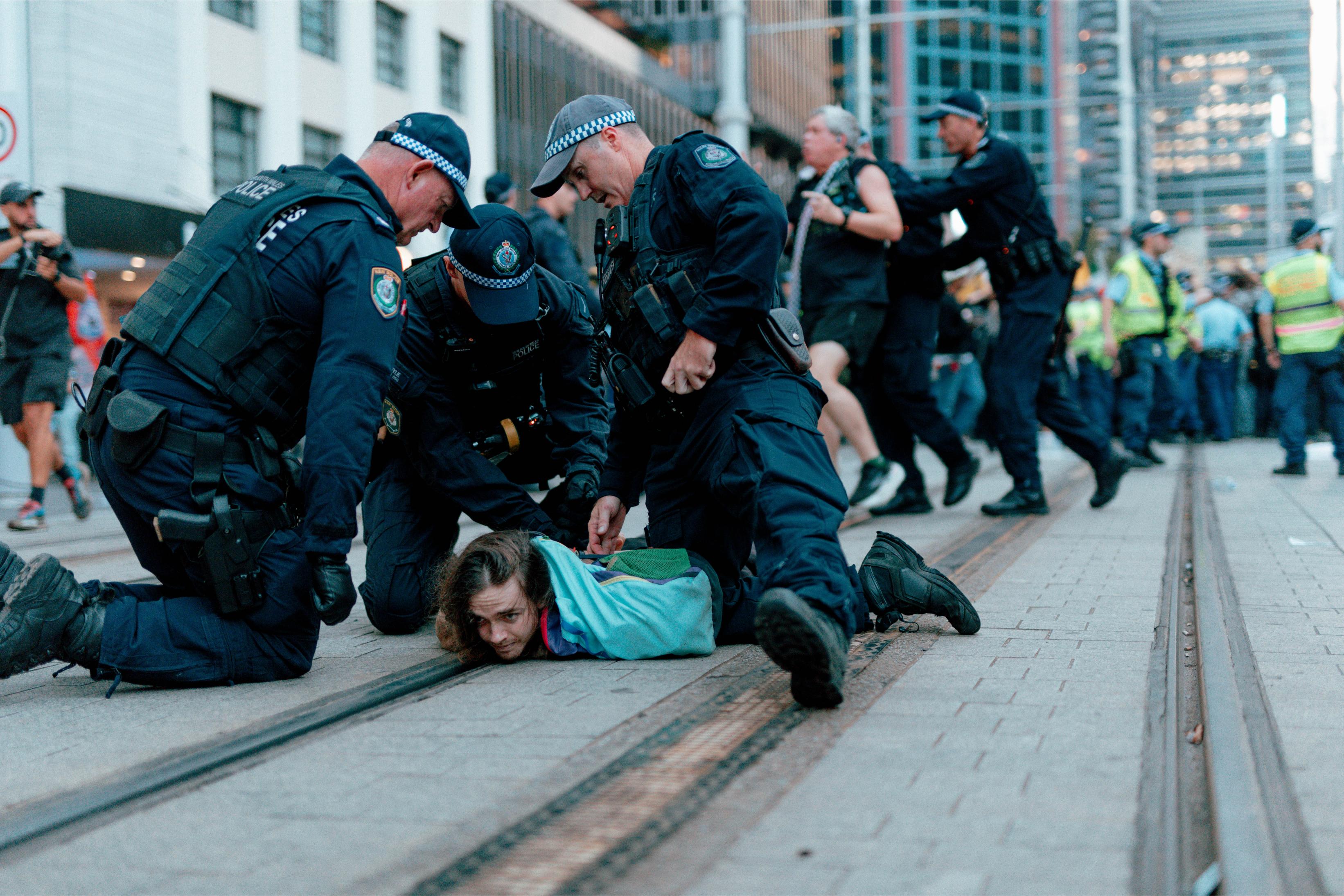
Not quietly. Not subtly. Out in the open. Batons. Boots. Police lines closing in on people doing something this country claims is fundamental to democracy: protesting.
What followed was predictable. A police statement. A media echo. And the familiar language of disruption, threat, and something ironically declared “Un-Australian”.
The violence wasn’t only physical. It was narrative.
This is not new. It is a pattern. A behaviour repeated whenever the people step outside the narrow version of democracy the state is willing to tolerate.
Protest is not a gift from government. It is not something granted on the condition that it remains polite, quiet and easily ignored.
The right to peaceful assembly is recognised under Australian law and international human rights frameworks. It exists precisely for moments like this – when elected officials are no longer representing the will, values or safety of the people.
If protest must be approved to be lawful, then it isn’t protest.
And if a democracy cannot tolerate dissent, then it is not functioning as one.
The NSW Government has moved, again and again, to restrict protest. Expanding police powers. Tightening laws. Framing dissent as danger. This doesn’t reduce the need for protest. It confirms it.
There’s an idea that refuses to die: that media is meant to be neutral.
It never has been.
Neutrality only exists where power is evenly distributed. Where it isn’t – and it never is – 'neutrality' simply means siding with the strongest institution in the room.
When police statements are treated as fact and citizen footage as “out of context”, neutrality has already chosen a side.
STAUNCH. does not pretend otherwise.
We are a First Nations–owned media outlet. We understand, historically and materially, that neutrality has never protected minorities or persecuted peoples. It has only insulated power from accountability.
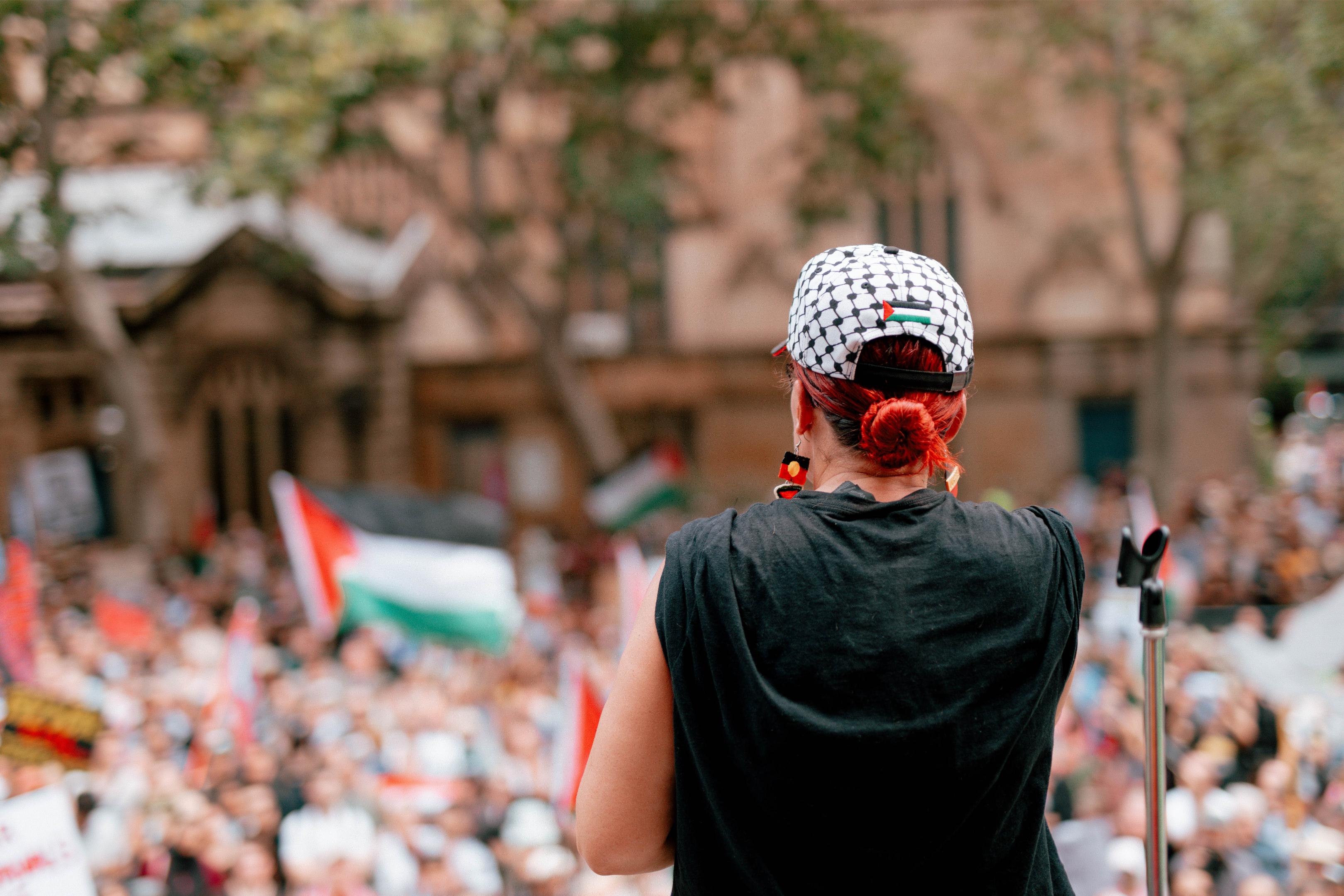
The people have a right to protest. Not symbolically. Not politely. But materially.
When a government invites a war criminal the Israeli president, Isaac Herzog – a senior political figure of a state currently under investigation by international legal bodies for alleged war crimes – to visit and tour Australia, protest is not an abstract moral appeal. It is disruption. It is refusal. It is an attempt to interrupt business as usual.
This is where protest has changed.
It is no longer primarily about emotional or academic appeals to the conscience of the state. That model assumes the state is listening. It isn’t.
Protest now is about interference. About preventing the state from proceeding with actions that are illegal, immoral or violent.
Politicians, police and large parts of the media are deeply uncomfortable with this shift. They are used to protest that can be ignored.
This cannot be.
The NSW Police response last night was heavy-handed. That is not rhetoric. It is fact.
Multiple examples of citizen journalism shows protesters being kettled, struck, dragged and forcibly removed.
NSW Police say the footage lacks “context".
Premier Chris Minns says we shouldn’t judge police actions based on “15-second videos”.
Here is a straightforward proposition: release the body-worn camera footage.
If context explains the violence, transparency should be welcomed. If police conduct was justified, show us. Participate in the democratic process.
Obfuscation is not accountability.
Police described the protest – and Muslim prayer – as “Un-Australian".
This should alarm anyone paying attention.
Australia is a colonial state built on violence against minorities, most notably First Nations peoples. There is no Australia without it. Policing itself emerged as an instrument of that violence.
For First Nations people, state violence is not an escalation. It is continuity.
What we are seeing now is that same logic applied more broadly — to Muslims, to migrants, to pro-Palestinian protesters, and increasingly to anyone who refuses compliance.
Listening to Panic World’s podcast episode 'Abolish ICE' sharpened something already clear, particularly in the context of protests in the United States.
They reference the idea of the 'dual state', drawn from Ernst Fraenkel’s work which was discussed recently in the New York Times by David French.
The idea is simple and terrifying.
Most people live in the 'normative state' – laws appear stable, rights appear intact, daily life continues. But alongside it exists the 'prerogative state': a space of unchecked power, arbitrary violence and legal exception.
The danger is not that the normative state disappears overnight. It’s that its continued existence convinces people nothing is wrong.
“Things aren’t that bad”, you tell yourself. “My life is fine".
Until it isn’t.
First Nations people have always lived under the prerogative state. We have always known what it looks like when law becomes permission and police become force without consequence. What is new is how visible that reality has become to others – mirroring scenes from the United States, where armed agents like ICE brutalise communities while much of the public looks away, reassured that this violence is not meant for them.
Online responses have been as disturbing as the police violence itself.
Comments celebrate the beatings. Claiming footage is AI-generated. Insisting there were only “hundreds” of protesters when thousands were present. Saying this is exactly what police are paid to do.
This is how authoritarianism stabilises. Not only through force but through participation.
The people help the state attack the people.
Former prime minister Tony Abbott has said he is proud of the police response and wants rubber bullets added to their arsenal, as reported by Ette Media and covered by The Sydney Morning Herald under the headline, 'My blood has boiled: Tony Abbott says police who punched protesters should be praised'.
Chris Minns has, in the same breath, compared last night’s protests to terrorism, invoking the Bondi attacks while referencing demonstrators and Grace Tame.
It raises a necessary question: does the Premier believe the people in the streets are terrorists?
STAUNCH. exists because we have lived this before.
First Nations people have always been subject to a different application of law. What we are seeing now is not new violence — it is expanded violence.
We will not retreat into neutrality.
We will publish harder. Louder. Sharper.
We call for First Nations writers, thinkers and commentators to write into this moment. To document it. To analyse it. To hold the state to account while others refuse to.
This is not about optics.
It is about power.
The people spoke last night.
The state answered with force.
Our job is to make sure that answer is recorded, interrogated and remembered.
First Nations first. The people always.
By Travis De Vries
Images: Jack Toohey
Share

Recent posts
Navigation
Follow


Legal
Privacy Policy

.png)
.png)
.png)