
Kaylene Langford
interview, art, culture
June 24, 2026
Share

Imagine existing in a mandatory education system that intentionally erased evidence of your bloodline's existence. A strategy employed to keep you subdued, palatable and distracted from any ideas that could inspire you to demand an apology, recognition or at worse, retaliation. While white Australia’s systems continue to take no accountability for their past atrocities committed against the Indigenous people of this land, Aboriginal people are forced to live in a society that persists in its ongoing erasure of this country's Blak History.
Facing this reality as a school girl, Aretha Brown, a Gumbaynggirr woman began demanding that the institutions around her TEACH BLAK HISTORY.
Lacking resources, she began to paint symbols handed down to her from her matriarchs and those she collected along her way. They would serve as her weapon to resist the erasure of her people's stories. Her radical symbols would make their way to seven different counties, accompanying the Irish hip hop trio Kneecap and Melbourne based rock band Amyl and the Sniffers on major stages. Eventually they would be exhibited inside the very institutions she fought to ensure they recognised her people's past.
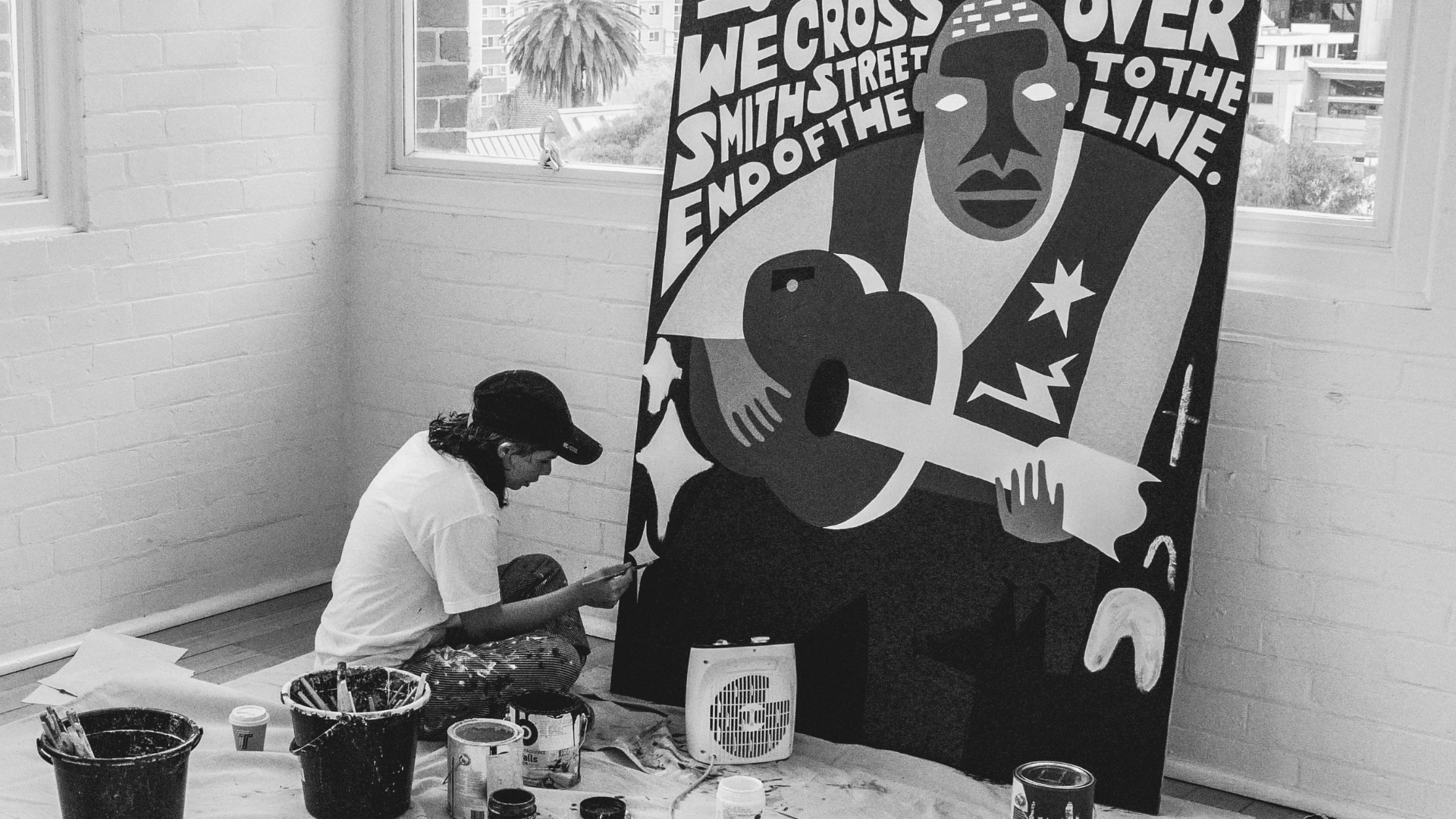
When I was in high school, I would go into history class and there was virtually no Aboriginal history being taught. At home and it would be a direct contradiction.
My grandma who I would speak to every day was from the stolen generation. I would hear all her stories of what it was like being taken from the Nambucca mission, and when I went back to school none of it was being taught. I always felt like I was being educationally gaslit in a way, I suppose it radicalised me in a way to say something.
I started connecting with some mob like Uncle Gary Foley and some of the mob from down Melbourne way and started speaking at a lot of the invasion day rallies, the first one I spoke at, I was 15.
I was so fired up, I did that for a long time and was elected as the first female Prime Minister of the National Indigenous Youth Parliament. I was flying to Canberra on weekends and then back to school on Monday mornings.
It was exciting, but it was also exhausting and I was like, man, I'm gonna say this exact same message of ‘teach black history’ over and over again.
I had to find a way to say it in a more sustainable way for my own health.
All the women in my family are painters, like if you're a Brown, which is my mob, you're either a painter or a musician, so I picked painting. I'm saying the exact same message of ‘teach black history’ but just in a different avenue, that's more sustainable for me because it's not as taxing on my body or my spirit.
I would say that I think every Aboriginal person is an activist. I'm not into the elitist thing of you've got to earn that title, I think that's bullshit. I think every young Blak fella, especially, is an activist because of every space we've got to occupy, whether that's our schools, workplaces or communities. We’re all fighting the good fight and bringing culture alive and that kind of existence and resistance in this kind of colony is activism.
For me an artist and an activist are the same thing.
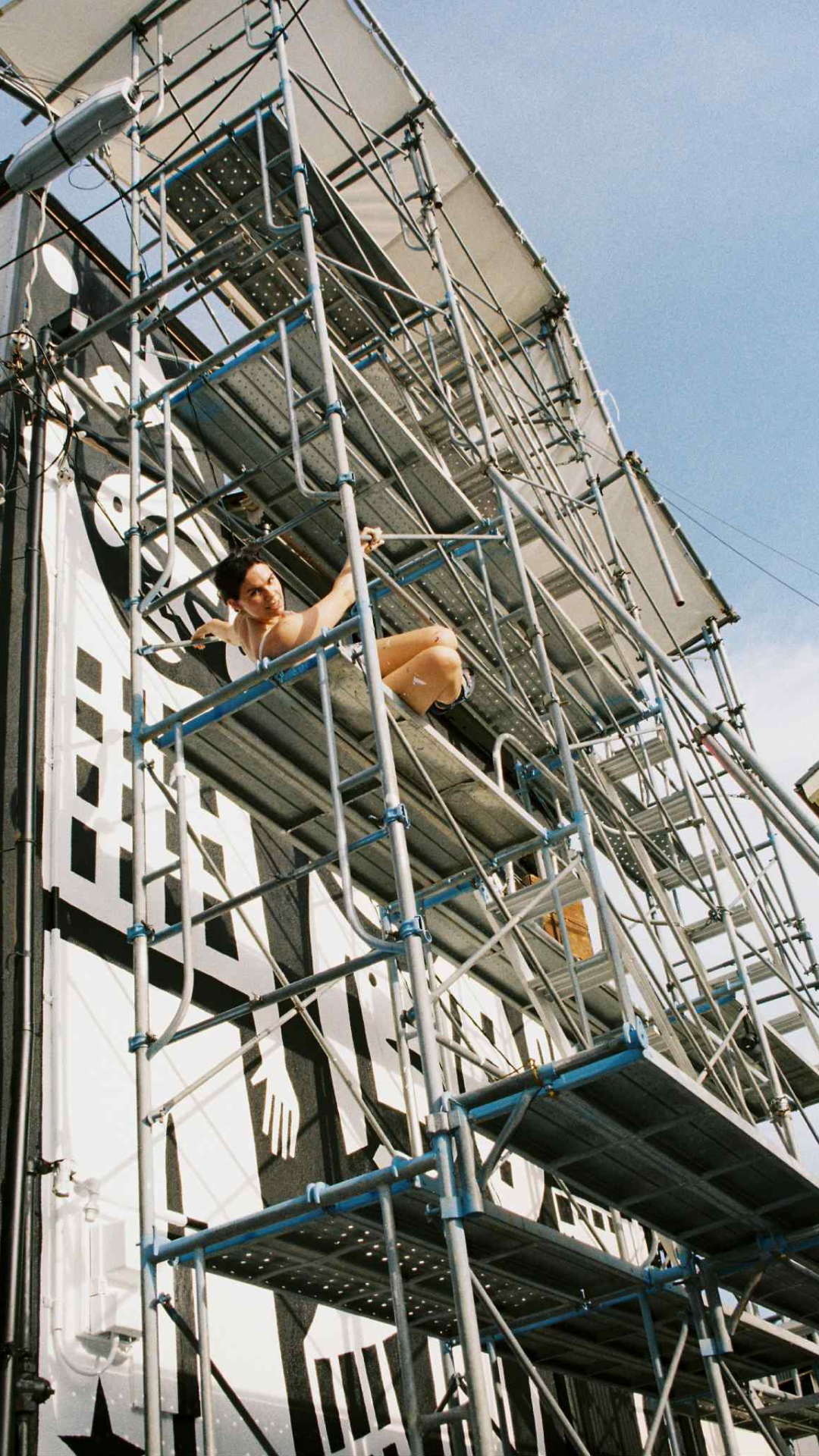
All the Blak women in my family were painters, and so I got taught some symbols passed down, which I used but then I added my own symbols on top of that and made my own kind of visual language that people now know.
To be honest, a lot of it came down to restrictions put on me, not by choice. For example, the black and white thing, when I first started at art school, I literally could only afford black and white paint. I had enough money for a 10 litre tin of white, one 10 litre tin of black from Bunnings.
All my other classmates could afford every colour under the sun, and I couldn't. I went, fuck, I'm going to have to make do with black and white. And that limitation made my style. Now that I can afford colour, I don't want to go back because it's me.
I had to learn to say things with restrictions and so my advice for young mob all the time is, even if you’re coming from a background that you don't have a lot of money or you don't have a lot of resources around you, it can be the best thing as an artist because it forces you to be truly creative.
Sometimes creation comes from pressure or restriction.
As for the symbols, I struggle with reading and writing and I have dyslexia so my spelling’s not very good. For me, it was always how I can say what I want to say in the most immediate way possible, with accessibility always being at the forefront? The answer for me was - pop art and big symbols.
Any language, any background, you can kind of look at a star and it's got a meaning to you or if you're from a deaf background, you can still experience my work.
I just love symbols.
I think I collect symbols and if we look historically before Captain Cook, Indigenous people don't have a written language in the European sense. Everything of ours is passed down through art, storytelling, language, culture, traditions, cartography, maps. Everything is so visual.
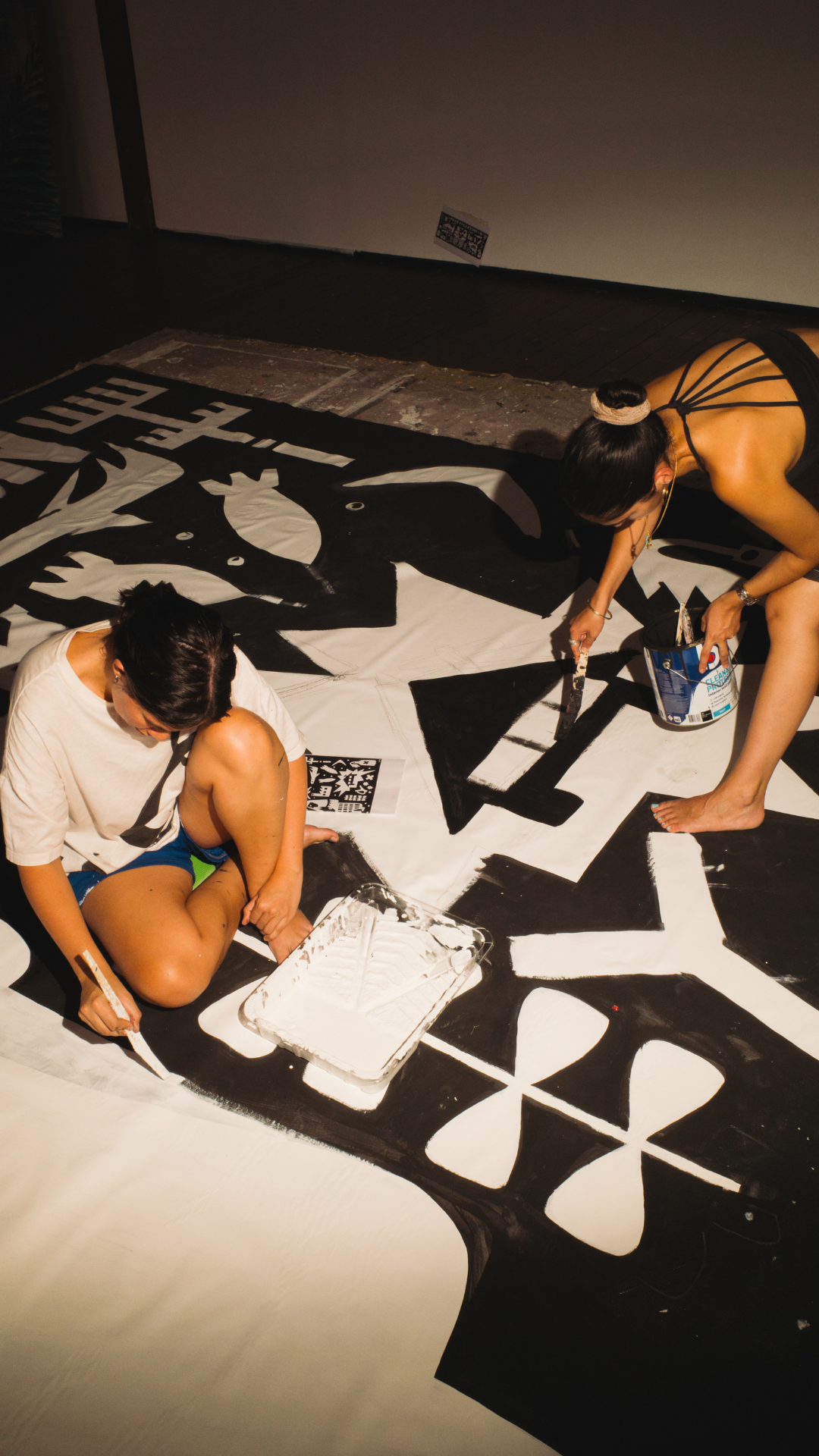
I've been lucky with Kiss My Art, my collective to paint across the world. People are desperate for Aboriginal art. The number one thing this country (Australia) does is make you feel like you're isolated and like our work is not that important, but if you go overseas people are desperate for that kind of storytelling,
Our country is very good at making us feel small and niche and it's not actually the case. I've always gotten that kind of respect overseas, but that's nothing new. There are so many Aboriginal artists that have that exact same experience if you look at someone like Richard Bell.
A lot of black African American mob got that when they would go to Europe if you looked at people like Josephine Baker or James Baldwin. Sometimes you got to get out of the country to look back into it.
My advice to young mob, there's an audience that is desperate to see our art and stories, it's just sometimes we're in the wrong spot. You just gotta get out there. Renew your passport!
It's always a kind of gratitude, which is really nice. I painted in East Timor, which is the poorest country in Southeast Asia, and I've got a big East Timor connection.
The gratitude that I experienced painting there was insane, I had members of the community desperate to cook for me and my collective, little kids like running off the school bus to come and paint with us.
That collab came out pretty naturally. I'd followed them for a long time and when I saw they were coming to Australia I messaged them and I was like, do you guys want some art?
And they were like a 1000%, which was the coolest message to get. They were so lovely to work with. Genuinely the sweetest boys and it just felt natural and I felt really safe. I remember when I did that mural I was really nervous when I sent the design because I had all these balaclavas, Molotov cocktails, tanks and guns and it was pretty violent but that's the history of Ireland and the IRA.
The only note I got back for them was, this is great, but can we add more Molotov cocktails?
I was like, yes, these are my people. They let me go really hard with what I wanted to say in a way that I couldn't do in a public space.
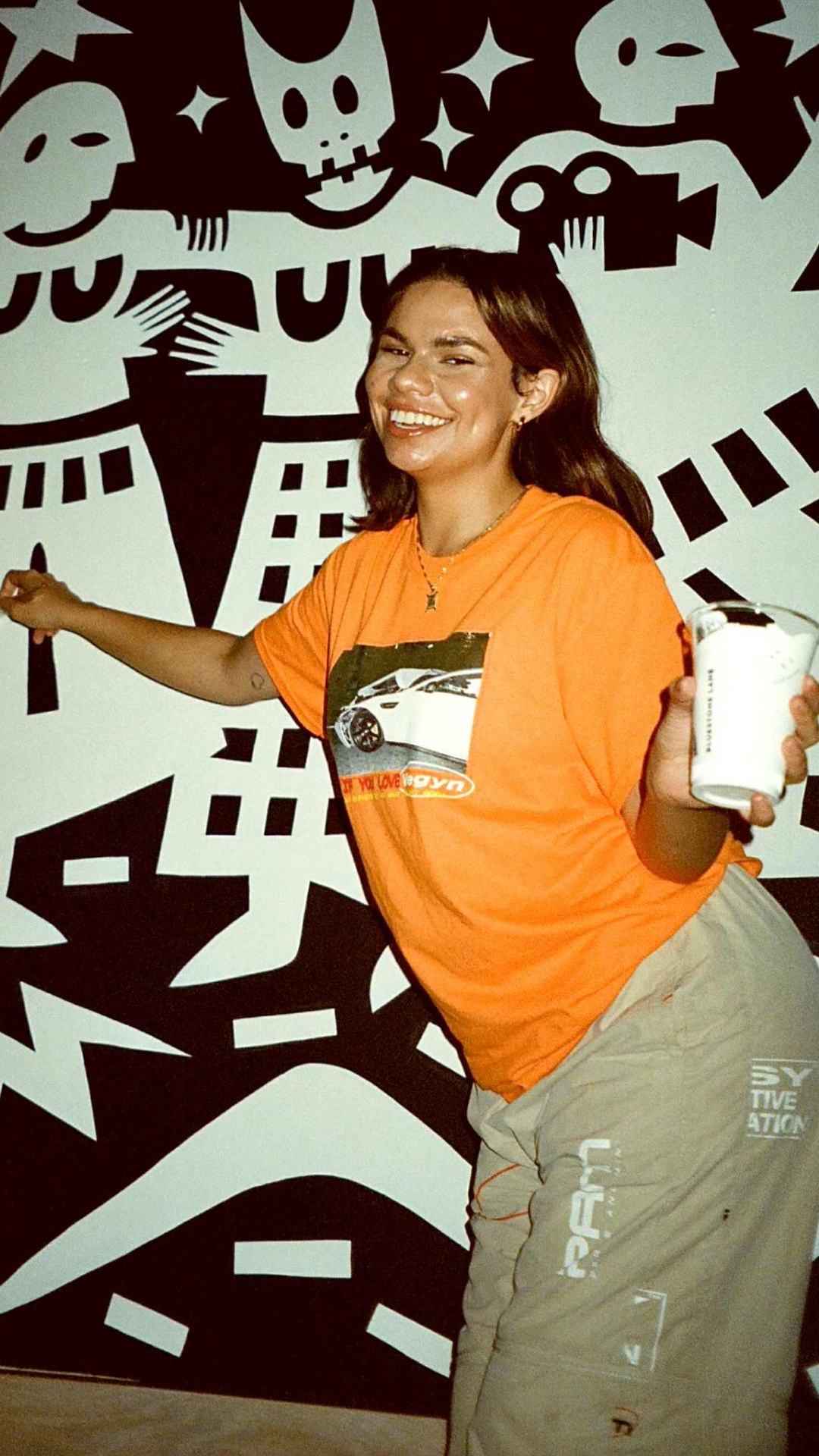
I'm actually working on a TV series right now called Shame Job, which is really exciting. I've been developing it for over 4 years. I have been writing comedy for a long time for other people. I loved that I got to write, but I didn't have to put a face to it but this show came from me keeping a lot of my own ideas and putting it into something for myself.
Senator Briggs is involved, he's in our writer's room now and is a mentor on the show and he's a good friend of mine now which is cool. I love painting, but I'm ready for something different now.
You don't have to do the traditional route of anything, ever.
Especially as an artist you don’t have to do the traditional gallery route. I never did it and it's been good because I've got to keep my voice. We've done 70 murals all over the world and we had to do 70 murals outside of the system of traditional gallery spaces to then be invited back into the National Gallery which is pretty crazy.
I didn't ever want to work in galleries because they traditionally and historically have never been spaces for mob. There've been places of trauma and places where our objects and art have been whitewashed or minimised or stolen.
I realised that I don't really need those guys because at the end of the day, my phone is my gallery! Social media has democratised everything.
It's also economically viable as well. The only reason I can sustain being an artist full time at 25 is because I do street art and I get to keep 100% of my money.
‘If I'd gone the traditional gallery route, I probably would have had only two shows at 25, but I needed to make, and output more than that.’
You have to make your own opportunities. I really believe that when it comes down to grants, the grant you're looking for your project will never exist if it's a good project. Grants can sometimes really limit artists and so you have to work backwards.
Ask yourself what do you want to do? What's a really interesting idea and then you work backwards for funding. We've hustled to do things in so many different ways with different sponsorships, doing pop-up stores to help pay for trips or selling merch is a huge part of how we fund all of our projects, which a lot of people wear.
If you want to do something, don't take no for an answer.
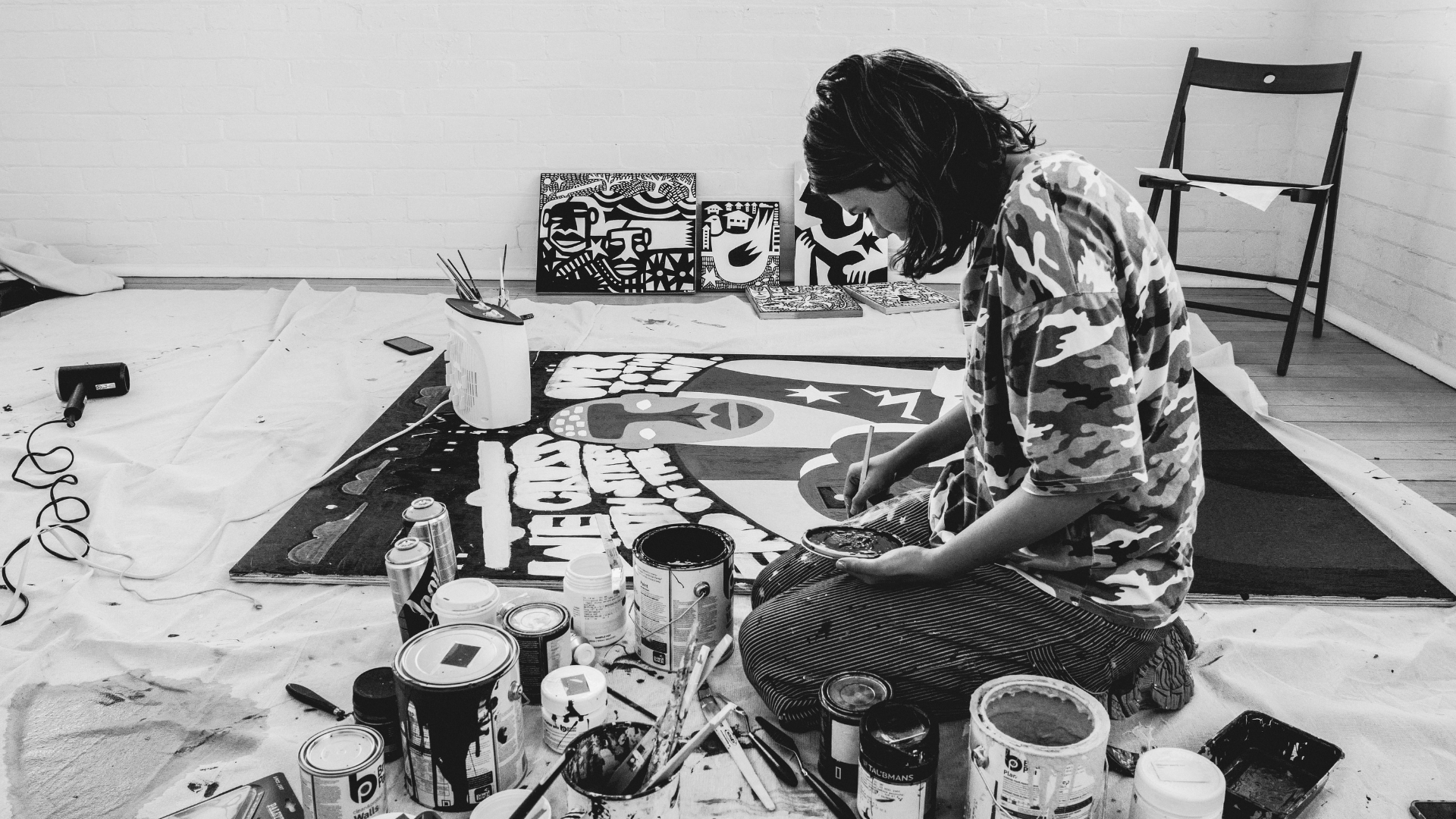
Inspired by the women in her life, Aretha never accepted the limitations that the injustices in her home country intended to enforce upon her. Instead she spoke up using her voice, her art, her symbols and creative power to elevate her culture as an Aboriginal woman. Her work continues to travel the world, inspiring activism for those whose voices are marginalised. Not only is she breaking ground of ‘firsts’ for Aboriginal women, she continues to carve out spaces for more young Blak fellas to get their art seen and heard around the world.
Written by Kaylene Langford
Support Aretha Brown's work
Join our mailing list
Follow @awesomeblack.studio
Recent posts
Navigation
Follow


Legal
Privacy Policy

.png)
.png)
.png)